Water is one of those distinct elements of homeownership that is universally loved when it’s in a pool or a hot shower, but universally dreaded when it escapes the plumbing. It is often referred to as the “universal solvent” because, given enough time, it can dissolve or destroy almost anything in its path.
While a burst pipe or a flooded basement is an obvious catastrophe, water damage is often far more insidious. It creeps behind walls, under floorboards, and into attics, causing structural rot and health hazards long before you spot a puddle. Recognizing the early warning signs is critical to saving your home and your wallet.
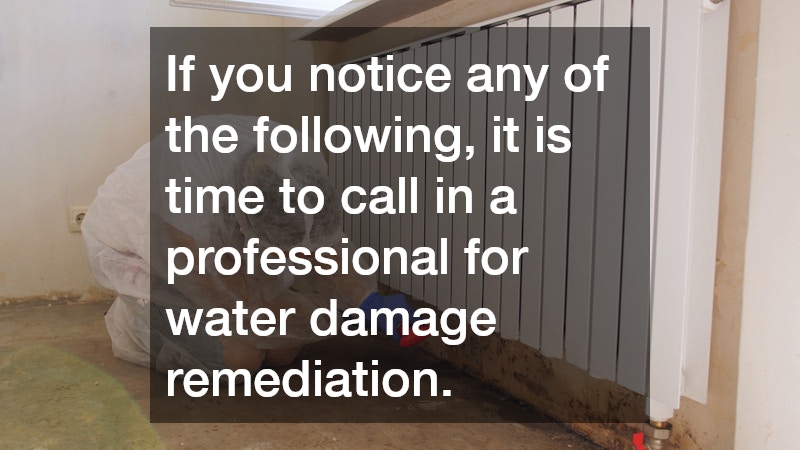
If you notice any of the following red flags in your home, it is likely time to call in a professional for water damage remediation in Jacksonville, FL.
1. Unexplained Stains and Discoloration
One of the most common early indicators of a water issue is a change in the color of your walls or ceilings. You might notice a yellowish, brown, or copper-colored ring on the ceiling, often referred to as a “water halo.”
These stains don’t appear out of nowhere; they are a sign that water is saturating the drywall or plaster from above. Even if the area feels dry to the touch, the stain indicates that a leak occurred at some point and may still be active intermittently. Painting over these stains without fixing the source is a temporary bandage on a wound that needs surgery.
2. A Persistent Musty Odor
Sometimes, your nose will detect water damage before your eyes do. If you walk into a room or a basement and are hit with a heavy, damp, or earthy smell, you likely have hidden moisture.
This musty odor is usually the byproduct of mold and mildew growth. Mold can begin to grow within 24 to 48 hours of water exposure. If you cannot see any visible mold but the smell persists despite cleaning and ventilation, the moisture is likely trapped inside a wall cavity, under carpeting, or in the HVAC system. This is a prime scenario where professional water damage remediation is necessary to locate and remove the source of the moisture.
3. Peeling Paint or Wallpaper
Your walls should be smooth and uniform. When water seeps into drywall or plaster, it compromises the bond between the wall surface and the paint or wallpaper.
Look for:
-
Bubbling or blistering paint: This happens when water vapor gets trapped behind the paint layer.
-
Peeling wallpaper: Saturated adhesives lose their grip, causing corners and seams to curl away from the wall.
-
Swollen drywall: If a section of the wall looks bloated or feels soft to the touch, it has absorbed significant water.
4. Warped or Buckling Flooring
Floors take a beating from water damage, especially if the leak is coming from a subfloor pipe or a slab leak. Hardwood floors are particularly revealing. You might notice “cupping,” where the edges of the planks rise higher than the center, or “crowning,” where the center rises higher than the edges.
Laminate flooring may begin to peel or separate, and tile floors may become loose as the grout breaks down and the subfloor softens. If you step on a spot that feels “squishy” or spongy, the structural integrity of the floor is at risk.
5. A Sudden Spike in Utility Bills
Not all signs of water damage are physical—some are financial. If your water usage habits haven’t changed but your monthly bill has skyrocketed, you likely have a continuous leak.
A running toilet is a common culprit, but the issue could also be a pinhole leak in a pipe behind a wall or under the foundation. While the water leaking might be clean initially, the damage it causes to your home’s structure over weeks or months can be devastating.
The Bottom Line
Ignoring these signs rarely makes the problem go away; in fact, water damage compounds over time. What starts as a small drip can evolve into black mold growth, rotting framing, and compromised foundations.
If you spot these warning signs, quick action is your best defense. Engaging a certified team for water damage remediation ensures that not only is the water removed, but the area is properly dried, sanitized, and restored to its original condition.