

Key Takeaways:
- A 5-star hotel experience is defined more by consistent service quality and attention to detail than by luxury interiors or expensive amenities.
- Guests form their impression early, starting from booking and check-in, meaning every touchpoint in the journey matters.
- Strong internal systems, clear procedures, and well-trained staff are essential for delivering smooth and reliable operations.
- Frontline departments like reception and housekeeping have a disproportionate impact on overall guest satisfaction and reviews.
- Personalization and emotional connection significantly increase guest loyalty and the likelihood of repeat stays.
- Handling complaints quickly, respectfully, and with clear solutions can turn negative experiences into long-term trust.
- Continuous improvement through structured feedback ensures the hotel keeps evolving and maintaining high service standards over time.
Running a hotel that consistently delivers 5-star guest experiences is not just about luxury interiors or expensive amenities. It’s about how every small interaction makes a guest feel valued, comfortable, and taken care of from check-in to checkout.
In reality, guests judge a hotel long before they enter their room. The booking process, staff communication, arrival experience, and even how quickly issues are resolved all contribute to their overall impression. A truly high-performing hotel understands that excellence is built through systems, consistency, and attention to detail rather than occasional “wow” moments.
This guide breaks down the essential areas you need to focus on if you want to run a hotel that stands out in a competitive hospitality market and earns repeat customers, glowing reviews, and strong word-of-mouth growth.
What Does a 5-Star Guest Experience Actually Look Like?

A 5-star experience isn’t always about marble lobbies or rooftop pools. It’s about predictability in quality and emotional satisfaction.
Guests typically associate 5-star service with:
- Fast, smooth check-in and check-out processes
- Friendly and attentive staff who anticipate needs
- Spotless, comfortable rooms with reliable amenities
- Quick resolution of complaints or requests
- Personalized touches that make them feel recognized
- Consistent quality across all services
The key idea is consistency. One great experience doesn’t define a hotel—repeatable excellence does.
How Do You Build a Strong Operational Foundation?
Before you can impress guests, your internal systems need to work like clockwork. Hotels often fail not because of lack of effort, but because of disorganized operations.
Strong operational foundations include:
- Clear standard operating procedures (SOPs) for every department
- Reliable communication channels between staff shifts
- Proper inventory management for housekeeping and F&B
- Defined escalation paths for guest complaints
- Regular maintenance schedules for all facilities
When operations run smoothly behind the scenes, guests feel it even if they don’t see it. A well-run hotel feels effortless from the outside, and that illusion of ease is what creates a premium experience.
Training is also critical here. Staff should not only know what to do, but why they’re doing it. That understanding leads to better decision-making during unexpected situations.
How Can Front Desk Service Shape First Impressions?
The front desk is where guest experience is either elevated or damaged within minutes. It is the emotional “first handshake” of the hotel.
To improve front desk performance:
- Reduce waiting time during check-in
- Greet guests by name whenever possible
- Offer clear and simple explanations of hotel services
- Maintain calm, friendly communication even during peak hours
- Provide quick solutions instead of complicated explanations
Guests remember how they were treated when they first arrived. A warm, efficient welcome sets the tone for the entire stay.
Technology can help here too. Digital check-in systems, mobile keys, and automated confirmations reduce friction and allow staff to focus on hospitality rather than paperwork.
Why Is Housekeeping the Heart of Guest Satisfaction?
No matter how beautiful a hotel looks online, cleanliness determines whether guests feel comfortable staying there.
Housekeeping excellence requires discipline and attention to detail. Rooms should not just look clean—they should feel fresh and maintained at a level that guests don’t need to question.
Key practices include:
- Strict room inspection checklists
- Fast turnaround times for room cleaning
- Consistent linen and towel quality standards
- Immediate reporting of maintenance issues
- Deep cleaning schedules beyond daily servicing
A single overlooked detail, like dusty corners or inconsistent water pressure, can quickly lead to negative reviews. Housekeeping is where reputation is either protected or damaged.
How Should Food and Beverage Be Managed for a Premium Experience?
Food and beverage services often define how long guests remember their stay. Even if a hotel is not a full-service resort, small F&B offerings still matter.
To improve guest perception:
- Keep menu options simple but high quality
- Focus on presentation and consistency
- Ensure fast service during peak meal hours
- Offer dietary options like vegetarian or gluten-free choices
- Train staff to communicate menu items clearly
Even breakfast alone can shape a guest’s final review. A well-organized dining experience signals professionalism and care.
How Important Is Staff Training and Workplace Culture?
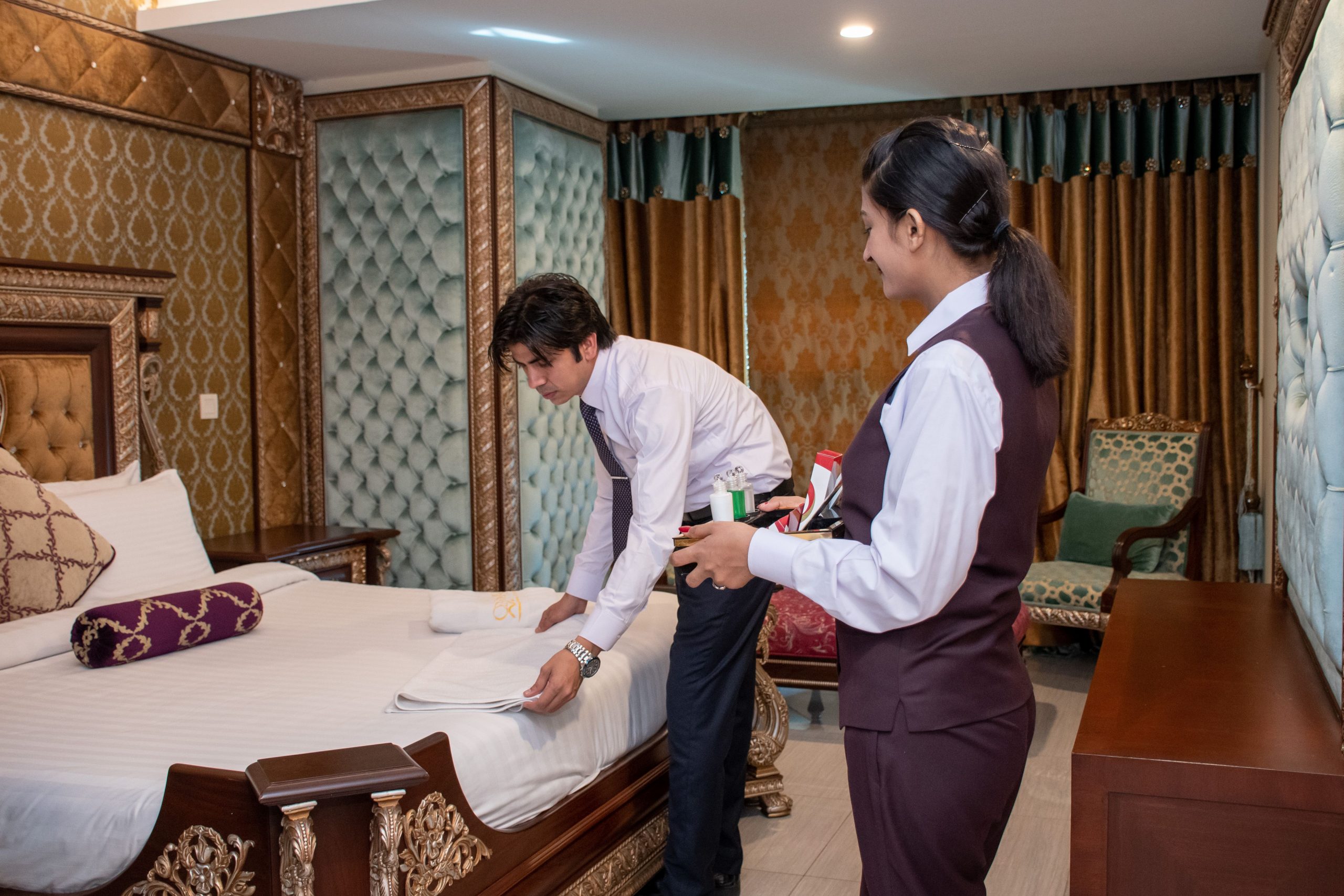
Your staff are the face of your hotel. Even the best systems fail if employees are disengaged or poorly trained.
A strong hospitality culture includes:
- Regular training sessions on customer service
- Empowering staff to make small decisions independently
- Encouraging respectful communication across departments
- Recognizing and rewarding excellent service
- Setting clear expectations for behavior and performance
When employees feel valued, they naturally pass that energy on to guests. A hotel culture built on respect and accountability creates a smoother and more welcoming environment overall.
Can Technology Improve Guest Satisfaction?
Modern hotels increasingly rely on technology to improve efficiency and personalization.
Useful systems include:
- Property Management Systems (PMS) for bookings and operations
- Customer relationship management tools for guest history
- Mobile apps for room service requests
- Automated messaging for check-in instructions and updates
- Smart room controls for lighting, temperature, and entertainment
Technology should simplify the guest experience, not complicate it. The goal is to reduce friction and free up staff time for meaningful human interaction.
How Do You Personalize Guest Experiences Effectively?
Personalization is what separates good hotels from unforgettable ones. Guests want to feel recognized, not just processed.
Practical ways to personalize service:
- Remember guest preferences from previous stays
- Offer welcome notes or small gestures for repeat visitors
- Customize room settings based on guest history
- Provide local recommendations based on interests
- Celebrate special occasions like birthdays or anniversaries
Even small touches can have a big emotional impact. Personalization creates loyalty, which is far more valuable than one-time bookings.
How Can Revenue Strategy Support Better Guest Experiences?
Strong guest experience and strong revenue strategy go hand in hand. A profitable hotel has more resources to reinvest in service quality.
To align revenue with guest satisfaction, consider:
- Optimizing pricing based on demand patterns
- Reducing dependency on third-party booking platforms
- Encouraging direct bookings through incentives
- Bundling services like breakfast or spa access
- Monitoring guest feedback to adjust pricing and offerings
A hotel that focuses on long-term stability rather than short-term gains is more likely to maintain high service standards. In fact, many successful operators realize that to truly build a successful business, guest satisfaction must always come before aggressive cost-cutting.
How Does Renovation and Design Impact Guest Experience?
Physical space plays a major role in how guests perceive quality. Even excellent service can be undermined by outdated or poorly maintained interiors.
Hotels should regularly evaluate:
- Room layout and comfort
- Lighting quality and ambiance
- Bathroom functionality and cleanliness
- Lobby design and first impressions
- Noise insulation and privacy
At some point, improvements go beyond small fixes and require larger upgrades. When that happens, it becomes necessary to plan a hotel property renovation carefully to ensure changes align with long-term brand goals.
Design is not just aesthetic—it affects comfort, flow, and even operational efficiency. A well-designed space supports both staff performance and guest satisfaction.
How Do You Scale Without Losing Quality?
Growth is exciting, but it can easily dilute service quality if not managed carefully. Many hotels struggle when they expand too quickly without consistent standards.
To scale successfully:
- Standardize all operating procedures across locations
- Use centralized systems for booking and reporting
- Maintain consistent brand training for staff
- Conduct regular audits of service quality
- Hire managers who align with company values
Growth should always reinforce, not weaken, the guest experience. Smart operators understand that expanding your business in hospitality requires patience, structure, and strong leadership at every level.
How Can Hotels Handle Complaints Without Losing Guests?
Even the best hotels receive complaints. What matters most is how those complaints are handled.
Effective response strategies include:
- Listening fully without interruption
- Acknowledging the issue immediately
- Offering clear solutions instead of excuses
- Following up after resolution
- Documenting issues to prevent recurrence
Guests are often more forgiving when they feel heard and respected. In many cases, a well-handled complaint can turn a frustrated guest into a loyal one.
How Do You Use Guest Feedback to Continuously Improve?
Guest feedback is one of the most underused tools in hotel management, yet it often contains the clearest roadmap for improvement. Reviews, surveys, and even casual conversations at checkout can reveal patterns that internal teams might miss.
The key is not just collecting feedback, but actively using it to refine operations.
Here’s how to make feedback genuinely useful:
- Categorize feedback into themes like cleanliness, service, food, or facilities
- Track recurring complaints rather than reacting to isolated comments
- Respond to online reviews promptly and professionally
- Share insights with relevant departments during weekly meetings
- Turn repeated issues into action plans with clear deadlines
It’s also important to distinguish between subjective opinions and operational gaps. One guest might not like a room’s decor, but if multiple guests mention slow Wi-Fi, that signals a real issue that needs fixing.
Hotels that treat feedback as a strategic asset often improve faster than competitors. Over time, this creates a feedback loop where service quality steadily increases, and guest expectations are consistently met or exceeded.
Conclusion: What Truly Defines a 5-Star Hotel Experience?
A 5-star guest experience is not built on luxury alone—it is built on consistency, care, and operational discipline. Every department, from housekeeping to front desk to management, contributes to how guests feel during their stay.
Hotels that succeed in this space are the ones that treat guest experience as a system, not a slogan. They invest in people, processes, and continuous improvement rather than relying on one-time upgrades.
When everything works together smoothly, guests don’t just stay—they remember, return, and recommend.