
A growing business rarely fails because of one big mistake. It fails, or bleeds cash unnecessarily, because of a dozen small site and facility costs that nobody budgeted for until the invoice showed up. Whether you are opening a second location, expanding a warehouse, or just trying to keep your current site running, the surprises tend to come from the same handful of blind spots. Understanding where those costs hide is the first step to actually planning for them instead of reacting to them.
Property Boundaries and Fencing Obligations Get Overlooked
When companies expand into a new lot or add outdoor storage, they often forget that perimeter security and boundary compliance are not optional extras. Many municipalities require fencing around equipment yards, dumpster areas, or hazardous storage, and that requirement usually surfaces only after a permit review or an insurance inspection. Hiring a fence contractor early in the planning process helps avoid rushed installation costs later, since last-minute jobs almost always carry a premium.
Fencing costs also vary widely depending on material, height requirements, and gate automation needs, which is why so many budgets underestimate this line item. A business that assumes a simple chain-link quote applies everywhere is often surprised when local code demands something sturdier or more visually screened.
- Get a written quote that separates materials, labor, and permit fees
- Ask whether wind load or soil conditions affect post depth and cost
- Confirm gate width requirements for delivery trucks or emergency access
- Factor in maintenance costs for gate hardware and automated openers
Roof Condition Often Gets Discovered Too Late
A leaking roof over a warehouse or retail space rarely announces itself politely. It shows up as water stains, mold complaints, or damaged inventory, usually right when a company can least afford the disruption. Bringing in a residential roofing company or a commercial equivalent for a proactive inspection before a lease renewal or expansion can catch small issues while they are still cheap to fix.
Roofing costs surprise growing companies because the damage is often invisible from the ground and only becomes obvious once it has spread to insulation or structural decking. Budgeting a modest annual amount for inspection and minor repair is almost always cheaper than an emergency replacement triggered by a storm.
- Schedule inspections after major weather events, not just annually
- Ask for photo documentation of flashing, seams, and drainage points
- Request a lifespan estimate so replacement can be budgeted in advance
- Check whether warranty coverage transfers if the property changes hands
Specialized Equipment Purchases Come with Hidden Lead Times
Companies in construction, landscaping, or municipal services often need niche equipment that cannot be bought off a shelf. A business that relies on grader blade manufacturing for road maintenance or site grading, for example, may discover that custom blade orders take months to fill, not weeks, especially during peak construction season. That lead time gets missed in budgeting because most cost conversations focus on price, not timing.
The real surprise here is cash flow related. A company that orders equipment late ends up paying rush fees or renting a substitute machine at a much higher daily rate, both of which quietly inflate the total project cost far beyond the original equipment quote.
- Ask manufacturers for realistic lead times, not just best-case estimates
- Order wear parts before the current set is fully worn down
- Compare rental costs against expedited purchase fees before deciding
- Keep a maintenance log so replacement timing is predictable, not reactive
Debris Removal Adds Up Faster Than Expected
Renovation, cleanout, and construction projects generate waste at a volume that most non-industry people underestimate until they see the dumpster fill up. Ordering roll off containers sounds like a simple, fixed-cost decision, but the final bill depends heavily on weight limits, rental duration, and what type of material goes inside. A company that mixes construction debris with general trash can trigger extra sorting or disposal fees that were never mentioned in the initial quote.
Timing matters too. Keeping a container on site longer than planned because a project ran behind schedule adds daily fees that were not part of the original estimate. Companies that plan disposal logistics alongside the project timeline, rather than as an afterthought, tend to avoid this particular surprise.
- Confirm weight limits before loading heavy material like concrete or shingles
- Ask what counts as prohibited waste to avoid contamination fees
- Compare flat-rate pricing against weight-based pricing for the project type
- Schedule pickup dates around realistic project completion estimates
Building Evaluations Reveal Costs Before They Become Emergencies
Many growing companies buy or lease a facility based on square footage and location, without fully understanding the building’s actual condition. A professional condition assessment examines structural integrity, mechanical systems, and code compliance, and it often uncovers deferred maintenance that the seller or previous tenant never disclosed. Skipping this step feels like a savings at first, but it usually just delays the discovery of expensive problems.
The value of an assessment is that it turns unknown risk into a known, budgetable number. A company that knows it needs a new HVAC unit in eighteen months can plan for it, while a company that gets blindsided by a mechanical failure has to pay emergency rates and absorb downtime at the same time.
- Request a written report with prioritized repair timelines
- Ask for cost ranges, not just a list of issues
- Use the findings as leverage in lease or purchase negotiations
- Revisit the assessment every few years as buildings age
Trade Show Presence Requires More Than a Booth Fee
Companies expanding into new markets often plan for the show floor fee and forget the actual display costs. A custom trade show booth can range from a simple modular setup to a fully branded structure with lighting, flooring, and shipping crates, and the price difference between those options is significant. Businesses that assume the booth is a one-time purchase are often surprised by storage, transportation, and refurbishment costs that recur with every event.
The other overlooked cost is staffing and logistics around the booth itself, including drayage fees charged by convention centers for moving materials in and out. Planning a realistic total cost per show, rather than just the booth build price, prevents the marketing budget from quietly ballooning year over year.
- Get quotes for shipping and installation, not just design and build
- Ask about storage fees between shows if the booth is reused
- Budget for minor repairs after each shipment and teardown cycle
- Compare rental booths against owned booths based on show frequency
Water Access on Remote Sites Carries Its Own Price Tag
Companies operating on job sites, agricultural land, or disaster response locations often assume water access will simply be available. When it is not, portable water purification systems become a necessary purchase rather than a convenience, and the cost includes filtration cartridges, testing, and ongoing maintenance, not just the unit itself. Businesses that treat this as a one-time equipment buy are often surprised by the recurring supply costs.
Compliance is another layer companies miss, since water used for drinking or food preparation on a work site may need to meet specific safety standards depending on the industry and location. Budgeting for periodic water testing alongside the equipment purchase avoids a compliance surprise down the road.
- Ask about filter replacement schedules and their ongoing cost
- Confirm whether local regulations require water quality testing
- Compare portable unit capacity against actual daily crew or site needs
- Factor in power or fuel requirements for units that are not fully manual
Quick Structures Solve Space Problems but Not for Free
When a business needs extra storage or workspace fast, hoop buildings often look like the budget-friendly answer compared to traditional construction. They are usually faster to erect and cheaper per square foot, but companies frequently forget to budget for the concrete pad, electrical runs, and insulation needed to make the space actually usable. The base structure price advertised rarely includes these finishing costs.
Permitting is another surprise, since some jurisdictions treat these structures the same as permanent buildings for code purposes, even though they feel temporary. Getting a permit consultation before ordering the structure prevents a costly redesign after the fact.
- Ask whether the quoted price includes site prep and foundation work
- Confirm insulation and ventilation options if the space will be climate controlled
- Check local snow load and wind requirements before finalizing the design
- Budget separately for electrical and lighting installation
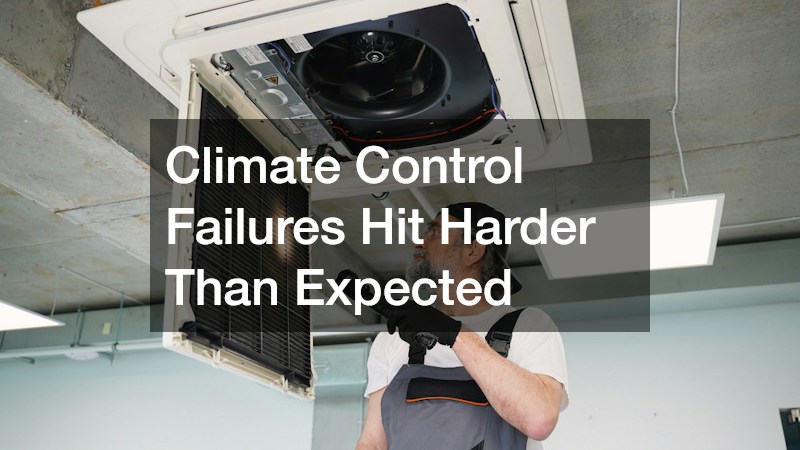
Climate Control Failures Hit Harder Than Expected
A facility’s comfort systems are easy to ignore until they stop working, and then the cost of heating repair becomes urgent rather than optional. Emergency service calls typically run well above the price of scheduled maintenance, and if the breakdown happens during a cold snap, companies often pay rush fees on top of the repair itself. Growing companies that add square footage or extend operating hours often push existing systems beyond their original capacity without realizing it. A unit sized for a single shift and one wing of a building strains quickly when the same space runs two shifts and an added storage area, and that strain shortens equipment life and increases the odds of a mid-winter breakdown.
The warning signs are usually there before the failure: uneven temperatures between rooms, longer run times, rising utility bills, or a system that cycles on and off more frequently than it used to. Many operations managers dismiss these as minor annoyances rather than symptoms of a unit working harder than it was designed to. Reactive repair calls almost always cost more than a scheduled service visit, and the gap widens when a failure forces production downtime, temporary space heaters, or a rushed equipment replacement instead of a planned one.
The bigger surprise is often downtime, not the repair invoice itself. A facility without functioning heat or air conditioning may need to close early, send staff home, or shift operations to a backup location, and those decisions come with costs that rarely show up in the maintenance budget. Inventory sensitive to temperature swings adds another layer of risk. Perishable goods, chemicals, electronics, and certain raw materials can degrade or become unusable within hours of a climate control failure, turning a mechanical problem into a product loss.
Emergency measures like renting portable units or paying overtime to relocate stock quickly add up fast. Lost productivity is harder to quantify but just as real. Employees working in extreme temperatures slow down, make more errors, or simply can’t stay for a full shift, and a multi-day outage can mean a multi-day dip in output. When companies tally the true cost of an HVAC failure, the repair bill is often the smallest line item on the list.
- Schedule seasonal maintenance before peak heating and cooling months begin, since units caught off guard in a July or January cold snap cost far more to repair on an emergency basis
- Ask a technician whether the system is sized correctly for current square footage, especially if you’ve added employees, equipment, or expanded floor space since it was installed
- Keep a service contract in place to get priority scheduling during peak season, when non-contract customers can wait days for a callback
- Track repair frequency to know when replacement becomes more cost effective — a common rule of thumb is to replace once repair costs exceed 50% of a new unit’s price
- Factor in age: most commercial HVAC systems last 15-20 years, and units past that mark become both less efficient and more failure-prone
- Compare emergency repair costs against a planned replacement budget, since after-hours service calls and expedited parts can add thousands to an already expensive fix
Structural Flooring Choices Affect Long Term Budgets
Companies expanding a warehouse mezzanine or multi-level facility often focus on the visible costs of construction and overlook how flooring material choice affects both price and future maintenance. Composite metal decking is a common choice for these projects because it balances strength and installation speed, but the upfront cost is only part of the picture. Long-term factors like corrosion resistance, load capacity changes, and future renovation flexibility all affect the real lifetime cost.
Companies that choose the cheapest decking option upfront sometimes pay more later when the material cannot support new equipment loads or requires early replacement. Getting engineering input before finalizing the material spec helps avoid a costly redo a few years into the building’s life.
- Ask for load capacity documentation specific to your intended use
- Compare corrosion resistance ratings if the facility has high moisture exposure
- Factor in installation speed if downtime during construction is costly
- Confirm whether the decking choice affects future renovation flexibility
Site and facility costs surprise growing companies not because the expenses are unpredictable, but because they are unfamiliar until a business encounters them for the first time. The good news is that every category covered here can be planned for with a little research and a few early phone calls. Start by walking your current site or expansion plans against this list and flagging anything you have not yet gotten a real quote for. That single step turns tomorrow’s emergency invoice into today’s manageable budget line.