
When a critical machine grinds to a halt, the sticker shock of the repair invoice is often just the tip of the iceberg. The real financial damage happens quietly in the background: missed deadlines, idle crews, and lost customers who take their business elsewhere. Understanding the full scope of what downtime actually costs can help you make smarter decisions about maintenance, staffing, and when to call for help. This article breaks down the hidden expenses that pile up long after the repair technician has gone home.
Lost Production Hours Add Up Fast
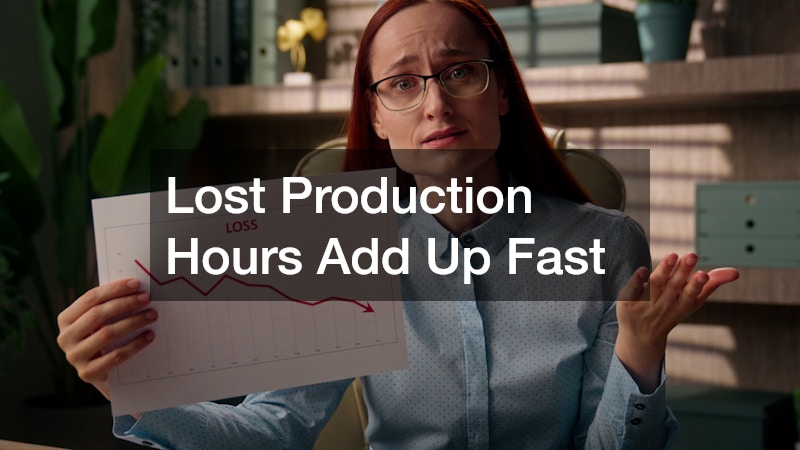
Every minute a machine sits idle is a minute your business isn’t generating revenue. Unlike the repair bill, which is a fixed and predictable number, lost production time compounds the longer the equipment stays offline. A single day of downtime on a production line can erase weeks of profit margin, especially in industries running on tight schedules. The math gets worse when you factor in what that idle time actually touches. Orders get delayed, shipment windows slip, and workers who can’t perform their normal tasks still need to be paid. A manufacturer running $50,000 worth of output per shift doesn’t just lose that revenue for the hours the line is down — they often lose the rest of the shift ramping back up to full speed. Downtime also has a way of rippling backward and forward through the supply chain. Suppliers may need to reschedule deliveries, and customers waiting on finished goods may look elsewhere if delays repeat. In just-in-time environments, a few hours of unplanned downtime can trigger penalty clauses or contract disputes that far outweigh the original repair cost.
Businesses that rely on continuous output, like manufacturing plants or processing facilities, often underestimate how quickly these losses scale. A single hour of unplanned downtime on a busy production line can mean thousands of dollars in lost output, and that figure climbs fast when you factor in idle labor, delayed downstream processes, and equipment that sits unused while workers wait for repairs. What starts as a minor mechanical issue can spiral into missed shipments and canceled orders if the equipment isn’t back online quickly. A conveyor belt failure or a broken compressor might seem like a small fix on paper, but if it halts an entire line for a full shift, the ripple effects hit order fulfillment, customer commitments, and contractual deadlines. The math only gets worse the longer the outage drags on. Companies often have to pay overtime to make up for lost hours once repairs are complete, and in some cases, they turn to costly rush shipping or third-party subcontractors just to keep customers satisfied. Each of these workarounds adds expense on top of the original repair bill, turning a routine mechanical failure into a much larger financial event.
- Idle labor costs continue even when machines aren’t running — operators, line staff, and supervisors still draw wages while producing nothing
- A single hour of unplanned downtime on a busy line can idle an entire crew, not just one machine
- Delayed output pushes back downstream processes, since one stalled station backs up every step that follows it
- Late production often means late shipments, which can trigger contract penalties or strained customer relationships
- Overtime pay is often needed later to catch up on lost production, adding a second cost on top of the original repair
- Rush shifts and weekend labor to hit deadlines typically run 1.5x to 2x normal wage rates, eating further into margins
Contract Penalties and Client Relationships Suffer
Many businesses operate under contracts with strict delivery timelines, and equipment failure doesn’t excuse a missed deadline. Late penalties, refunded deposits, or canceled contracts can cost far more than the mechanical fix itself. In some industries, a single missed delivery window can permanently damage a client relationship that took years to build.
Consider a timber buyer waiting on a shipment that depends on a supplier’s harvesting or processing equipment running on schedule. If that equipment breaks down and the load doesn’t arrive as promised, the buyer may pivot to a competitor for future orders. Reputational damage like this rarely shows up on a balance sheet, but it directly affects future revenue.
Supply Chain Disruptions Ripple Outward
Equipment downtime rarely stays contained to one business. When a supplier’s machinery fails, everyone downstream feels the effect, from distributors to retailers to end customers. This ripple effect can create shortages, price increases, or scheduling chaos across an entire supply chain.
The longer a disruption lasts, the more businesses scramble to find alternative sources, often at a premium price. This scramble can permanently shift buying habits, as companies seek out suppliers with more reliable equipment and backup plans in place.
- Alternative sourcing often costs more on short notice
- Delays can trigger a chain reaction across multiple business partners
- Long-term contracts may be renegotiated after repeated disruptions
Emergency Repairs Cost More Than Planned Maintenance
When equipment fails unexpectedly, businesses often have no choice but to pay premium rates for expedited service. Heavy equipment repair performed on an emergency basis typically costs significantly more than the same work scheduled during a planned maintenance window. Technicians may charge rush fees, and parts sourced under time pressure often come with inflated shipping costs.
Planned maintenance, by contrast, allows businesses to shop for competitive pricing, schedule repairs during slower periods, and avoid the chaos of last-minute logistics. Investing in a proactive maintenance schedule is almost always cheaper in the long run than reacting to breakdowns as they happen.
- Emergency labor rates can run well above standard pricing
- Rush-ordered parts often carry expedited shipping fees
- Planned downtime can be scheduled around low-demand periods
Worn Parts and Small Components Cause Big Failures
It’s tempting to assume that major breakdowns stem from major problems, but often the culprit is something small and overlooked. Worn bolts, bearings, and fasteners are frequently the root cause of catastrophic equipment failure. A single stripped or corroded fastener can cause an entire assembly to shift out of alignment, leading to far more expensive damage down the line.
Routine inspection of these small components is one of the most cost-effective ways to prevent unplanned downtime. Replacing a worn part during a scheduled inspection costs a fraction of what it takes to repair the damage it eventually causes if left unchecked.
- Inspect fastening points during every routine maintenance check
- Replace corroded or stripped hardware before it fails completely
- Keep a stock of common replacement parts on hand to avoid delays
The true cost of equipment downtime extends far beyond the number on the repair invoice, touching everything from client trust to supply chain stability. By recognizing these hidden costs, business owners can justify investing in preventive maintenance and quicker response times. The next time a machine shows early warning signs, treat it as an opportunity to act before a small problem becomes an expensive one. Taking that proactive step now can save far more than just a repair bill later.