

Clutter has a way of creeping up slowly until one day you realize your garage, closets, and spare room are all bursting at the seams. Whether you’re running a growing business or simply trying to reclaim your living space, ignoring the warning signs of an overwhelmed storage strategy usually makes the problem more expensive to fix later. The good news is that these signs are fairly predictable and easy to spot once you know what to look for. This guide walks through the most common indicators that it’s time to rethink how and where you store your belongings or inventory.
You Keep Renting Extra Space Every Few Months
One of the clearest signs your storage strategy is failing is a pattern of repeatedly renting additional units or space to handle overflow. If you find yourself signing a new short-term lease every quarter just to keep up, that’s not a temporary fix anymore, it’s a recurring expense that adds up fast. A single 10×10 unit might only run $100 to $200 a month, but stack three or four of those across a year, add in administrative fees, insurance, and the occasional rate hike, and you’re easily looking at several thousand dollars spent on space that was never meant to be permanent. Businesses in particular tend to fall into this trap because it feels easier than committing to a permanent solution. Renting one more unit requires a phone call and a signature; redesigning your warehouse layout or negotiating a bigger lease requires planning, capital, and buy-in from leadership. That asymmetry in effort is exactly why so many companies keep choosing the path of least resistance, even when it costs more in the long run. Tracking how much you’ve spent on these stopgap rentals over the past year often reveals the true cost of putting off a real decision. Pull your invoices from every auxiliary storage location, add in mileage or delivery fees for shuttling inventory between sites, and factor in the labor hours spent managing multiple locations instead of one consolidated space. Many businesses are surprised to find that a year’s worth of “temporary” rentals would have covered a down payment on a larger, permanent facility, or funded a more efficient racking and shelving system that solved the underlying capacity problem instead of just masking it.
If you’ve rented extra storage three or four times this year alone, it’s worth running the math on what that recurring bill actually adds up to over time. A 20-foot unit at $150 to $250 a month can easily cross $2,000 annually — money spent with nothing to show for it once the lease ends. A smarter long-term approach is looking at ownership rather than perpetual renting. Exploring shipping containers for sale can give you a fixed, one-time cost for secure, weatherproof storage that you control indefinitely, instead of an open-ended monthly bill. Once purchased, the container becomes a business asset rather than a sunk expense, and it can be resold later if your needs change. Many businesses recoup the purchase price within a year or two simply by no longer paying rental fees. This is especially useful for businesses that need to store equipment, seasonal inventory, or materials on-site rather than off-site. Keeping storage on your own property also cuts down on travel time to a rented facility and gives you round-the-clock access without coordinating with a third-party landlord. For companies with fluctuating inventory, adding a second or third container as you grow is often simpler than negotiating a bigger off-site lease.
Your Team Wastes Time Searching for Items
When employees or family members spend more time hunting for tools, files, or products than actually using them, that’s a productivity red flag tied directly to poor storage organization. This usually happens when items are stored based on available space rather than logical categories or frequency of use. Over time, this disorganization compounds, making even simple retrieval tasks frustrating and slow.
- Frequently used items are buried behind rarely used ones
- No labeling system exists for bins, shelves, or containers
- Multiple storage locations hold similar or duplicate items
- Staff or family members have differing ideas of where things belong
- Inventory counts rarely match what’s physically on the shelves
Seasonal Cleanouts Keep Producing the Same Piles
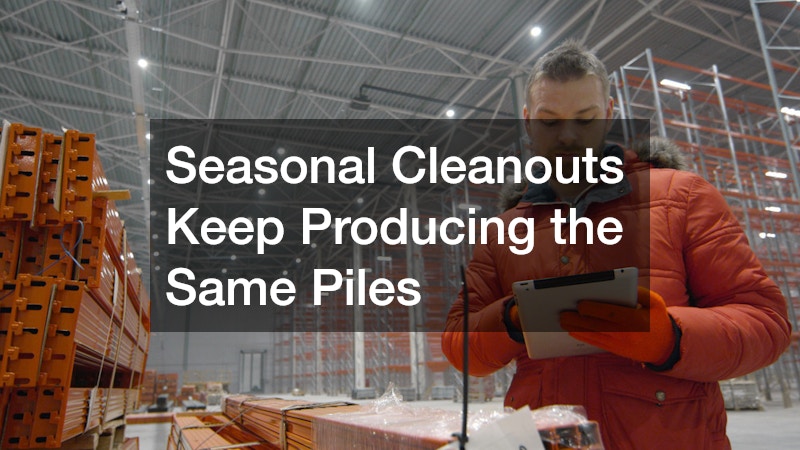
If every spring cleaning or year-end purge uncovers the same broken furniture, outdated equipment, or unusable materials, your storage system isn’t just full, it’s holding onto things that should have been discarded long ago. This is a sign that disposal has been neglected in favor of simply pushing items further into storage. Left unaddressed, this cycle repeats indefinitely and eats up valuable space that could be used productively. Look closely at what actually gets rediscovered each time. A cracked monitor stand, three-year-old marketing banners from a rebrand, or a stack of chairs waiting for a repair that never happens are all telltale signs of deferred decisions rather than genuine storage needs. If the same box gets shuffled from one corner to another without anyone opening it, that’s a strong indicator it should have been disposed of during the last cleanout, not the next one. The financial impact adds up faster than most teams realize. Storing a single pallet of obsolete inventory can cost anywhere from $20 to $50 a month depending on your facility, and multiplying that across dozens of forgotten items over several years turns into a meaningful drain on the budget. That’s money spent protecting things with no resale value, no functional use, and no plan for removal. Part of the problem is that cleanouts often focus on tidying rather than deciding. Employees will straighten piles, relabel boxes, or shift items to a different shelf instead of asking whether something should be kept at all. Building a simple decision rule, such as if it hasn’t been used in twelve months and can’t be repaired affordably, it gets removed, can break the cycle and turn seasonal cleanouts into actual reduction events instead of repeat inventory checks.
Breaking this cycle usually requires a dedicated cleanout rather than a gradual decluttering effort. Slow, piecemeal purging tends to stall out after the first few bags of trash, leaving the bulky items — broken furniture, old equipment, construction debris — right where they started. Booking a dumpster rental for a weekend project makes it far easier to commit to removing bulky, damaged, or obsolete items all at once instead of letting them linger. The size of the container matters more than most people expect going in. A 10-yard dumpster might handle a garage cleanout with a few years of accumulated clutter, while a warehouse purge or multi-office renovation often calls for a 20- or 30-yard unit to avoid running out of space halfway through the job. Underestimating capacity is one of the most common reasons a “one and done” cleanout turns into a second rental a few weeks later. This approach works well for home garages, office renovations, or warehouse cleanouts where the volume of unwanted material is too large for regular trash pickup. It also forces a decision point: items go in the dumpster, get donated, or get relocated to permanent storage — nothing sits in limbo waiting for a “someday” that never comes. Setting a firm end date for the rental, rather than leaving it open-ended, keeps the momentum going and prevents the pile from simply relocating from one corner of the space to another.
Your Current Setup Can’t Handle Growth
A storage strategy that worked fine a year ago can quickly become inadequate as a business scales up or a household accumulates more belongings. Growth is a good problem to have, but only if your storage plan can flex with it. Signs of this mismatch include stacking items precariously, blocking walkways, or using unsuitable spaces like hallways and garages as makeshift storage.
- Inventory or belongings are stored in unsafe or non-designated areas
- You’ve had to turn down orders or projects due to space limits
- Seasonal surges consistently overwhelm your current capacity
- New purchases sit in temporary spots for weeks before finding a home
- You avoid buying in bulk because there’s nowhere to put it
Buying New Isn’t Always the Most Practical Option
When businesses realize they need dedicated, secure storage, the instinct is often to assume new construction or brand-new units are the only route. That assumption can be expensive: a new storage building can run tens of thousands of dollars once permitting, foundation work, and labor are factored in, and even brand-new shipping containers for sale carry a noticeable premium over used ones simply for the “unused” label. Considering used shipping containers for sale offers a budget-friendly alternative that still provides durable, lockable, weather-resistant storage without the premium price tag of new construction. Depending on size, age, and grade, used units can cost 30-50% less than new ones while still offering the same corten steel construction designed to withstand decades of ocean transport and outdoor exposure. Many of these units are structurally sound and require only minor cosmetic work before they’re ready to use — think surface rust treatment, a fresh coat of paint, or replacing a worn door seal. When evaluating options, it’s worth checking for floor condition, weld integrity, and whether the container is rated “wind and watertight,” since that grade typically indicates it’s ready for immediate use with little to no repair needed. For businesses watching their budget, this middle-ground approach delivers the security and durability of new construction without the matching price tag, making it a practical first stop before committing to a costlier build-out.
When storage needs are growing but the long-term picture is still unclear, renting or buying a used shipping container can be a smarter move than investing in permanent construction. This option works particularly well for businesses testing whether on-site storage solves their space issues before committing to a larger, permanent structure. It also suits homeowners handling a major renovation or move who need temporary but secure storage on their property. Used containers typically cost 30-40% less than new ones, and rental agreements can often be arranged month-to-month, giving you the flexibility to scale up, downsize, or walk away entirely once your situation changes. A standard 20-foot unit runs a few thousand dollars to buy outright, while rental rates often land between $100 and $200 a month depending on your location and the container’s condition. Comparing a few sellers and inspecting units in person helps ensure you get a container that fits your needs and budget. Look closely for rust, floor damage, and door seals that no longer close tightly, since these issues can lead to leaks or pest problems down the road. It’s also worth asking whether the seller offers delivery and placement, as positioning a multi-ton steel container without the right equipment isn’t something most businesses can handle on their own.
Recognizing these warning signs early gives you the chance to fix your storage strategy before it starts costing you time, money, or missed opportunities. Start by honestly assessing which of these patterns sound familiar in your own home or business. From there, you can decide whether the right next step is a cleanout, a reorganization, or investing in a more permanent storage solution that actually keeps pace with your needs.