
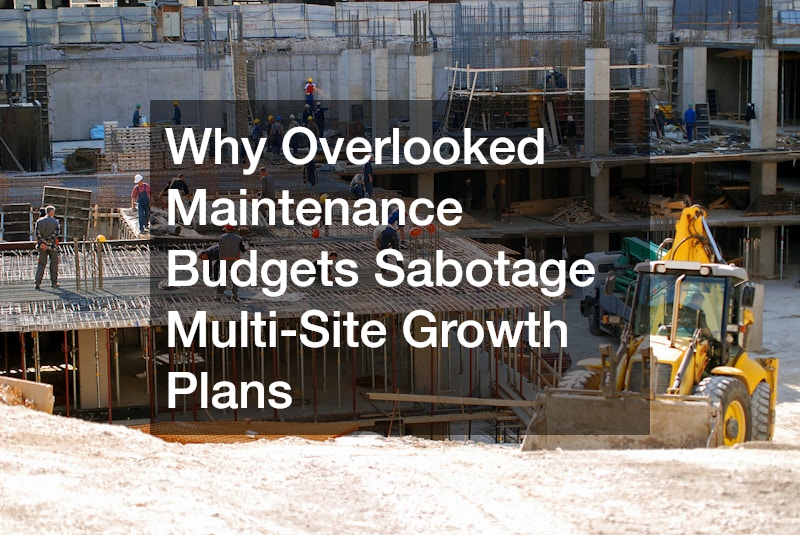
When a business decides to expand from one location to five, ten, or fifty, the excitement usually centers on new markets, new revenue, and new customers. What rarely gets the same attention is the unglamorous line item that keeps every one of those locations running smoothly: maintenance. Owners who underfund upkeep in favor of growth often discover, too late, that a single neglected building system can halt operations across an entire region. Understanding where maintenance budgets typically fall short can mean the difference between a scalable business and one that stalls out under the weight of its own expansion.
The Hidden Cost of Treating Maintenance as an Afterthought
Many growing companies build their budgets around rent, staffing, and marketing, leaving facility upkeep as whatever is left over. This approach works fine for a single location where problems are visible and easy to address quickly. Once a business spreads across multiple sites, though, small oversights compound because there is no longer one owner walking the floor every day to catch early warning signs. The result is a pattern of reactive spending that costs far more than a planned maintenance budget ever would.
Deferred maintenance does not disappear; it simply waits and grows more expensive. A leaking pipe ignored for six months can turn into a burst line that floods an entire storefront overnight. Multiply that risk across ten or twenty properties and the exposure becomes significant enough to threaten the entire expansion strategy.
Why Roofing Problems Multiply Across Multiple Properties
Roofs are one of the most commonly neglected systems in a multi site portfolio because damage develops slowly and out of sight. A small blister or seam separation at one location might seem minor, but if the same roofing material and installation vintage exist across several properties, that same failure point is likely lurking everywhere else too. Businesses that skip regular inspections often find themselves dealing with several simultaneous roof failures rather than one manageable repair.
Investing in commercial roofing inspections on a predictable schedule allows a business to catch problems while they are still cheap fixes. This is especially important after severe weather events, since storm damage in one region can affect every site built in that climate zone.
- Schedule inspections twice a year, plus after major storms
- Track roof age and material type across every location
- Budget for gradual replacement rather than emergency overhauls
- Keep warranty documentation centralized for faster claims
How Plumbing Neglect Turns Small Leaks Into Big Losses
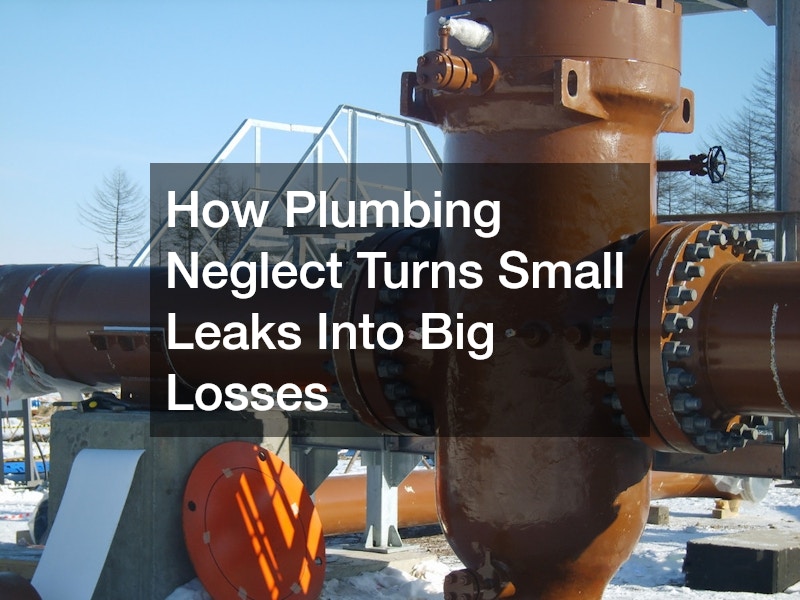
Plumbing systems tend to fail quietly until they fail dramatically. A slow drip behind a wall can go unnoticed for months, causing structural damage long before anyone sees a wet spot on the ceiling. Multi site businesses that do not standardize plumbing checks often rely on staff to report problems, but employees are rarely trained to recognize early warning signs.
Routine commercial plumbing service should be built into every site’s maintenance calendar rather than triggered only by visible leaks or customer complaints. Older buildings with aging pipe networks may also benefit from a hydro jetting plumber who can clear stubborn buildup and root intrusion before it causes a full blockage. This kind of preventive clearing is far less disruptive than an emergency shutdown during business hours.
- Inspect water heaters and shutoff valves annually
- Watch for slow drainage as an early warning sign
- Keep a plumbing contact on retainer for multiple regions
- Document pipe age and material for each property
Keeping Climate Control Systems Reliable Across Every Site
Heating and cooling systems are often the single largest utility expense for a commercial property, and neglected units become dramatically less efficient over time. A poorly maintained system does not just risk breaking down; it quietly drives up energy bills for months before anyone notices the pattern. Businesses expanding into new climates also need to account for how equipment demands change from one region to another.
Scheduling seasonal tune ups through reliable commercial HVAC services helps catch worn belts, refrigerant leaks, and clogged filters before they force a costly emergency call. A unit that fails during a heat wave or cold snap does not just cost money to repair; it can force a location to close entirely, frustrating customers and staff alike.
- Replace filters on a consistent schedule at every site
- Track equipment age to plan replacements before failure
- Compare energy usage across locations to spot inefficiencies
- Keep service records centralized for warranty purposes
Electrical Systems That Need Attention Before They Become Hazards
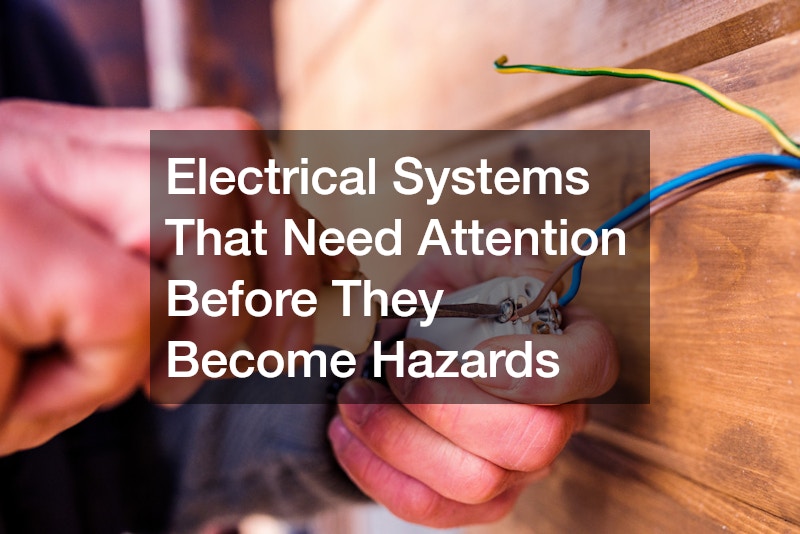
Electrical issues are particularly dangerous because they often show no symptoms until a fire, outage, or equipment failure occurs. A multi site business that expands quickly may inherit buildings with outdated wiring or panels that were never designed for modern equipment loads. Ignoring this risk does not just threaten safety; it can invalidate insurance coverage if an inspection reveals known hazards were left unaddressed.
Bringing in a licensed commercial electrical contractor for periodic audits ensures that panels, wiring, and load capacity are keeping pace with the equipment each location actually uses. This is especially important for businesses adding new machinery, digital signage, or kitchen equipment that increases electrical demand beyond what a building was originally designed to handle.
- Audit panel capacity before adding new equipment
- Test GFCI outlets and safety systems regularly
- Flag any flickering lights or warm outlets immediately
- Keep electrical inspection records for every property
Cleanliness Standards That Protect Brand Reputation
Customers form an opinion about a business within seconds of walking through the door, and cleanliness is one of the fastest signals they use to judge quality. A multi site brand lives or dies by consistency, and nothing undermines that faster than one location looking noticeably dirtier than another. Maintenance budgets that ignore cleaning contracts often see this reflected directly in customer reviews and repeat visit rates.
Contracting a dependable janitorial service for each site, rather than relying on internal staff stretched thin by other duties, keeps standards uniform no matter how many locations a business operates. This also frees employees to focus on their actual job responsibilities instead of squeezing in cleaning tasks between customer interactions.
- Set written cleanliness standards that apply to every site
- Schedule deep cleans separately from daily upkeep
- Audit locations periodically with a simple checklist
- Compare vendor pricing across regions for consistency
Preparing Sites for Renovation and New Construction
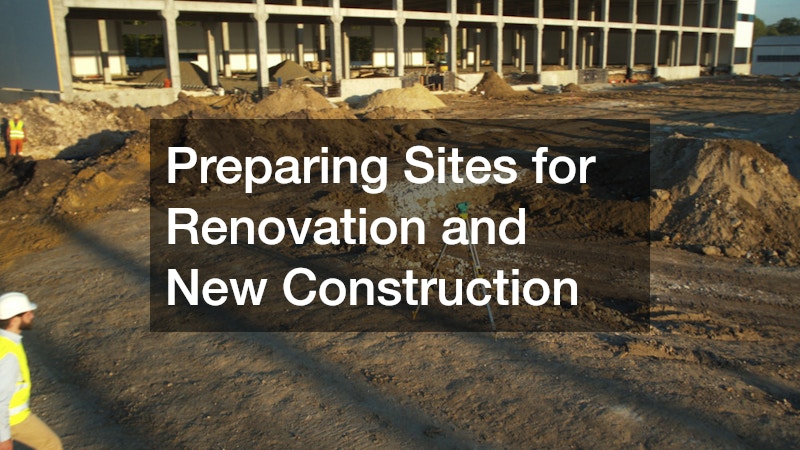
Growth often means more than just opening doors at existing buildings; it can involve renovating outdated spaces or building new locations from the ground up. Businesses that underestimate this phase often clash with timelines and budgets because they treat construction as a one time event rather than an ongoing part of expansion. Vetting experienced construction contractors ahead of time, rather than scrambling when a lease is signed, prevents costly delays.
A strong contractor relationship also pays off during unexpected repairs, since a company already familiar with a business’s standards and specifications can respond faster than starting from scratch with someone new. This continuity becomes especially valuable when a business is opening multiple locations within a short window.
- Vet contractors before a location is even secured
- Standardize build specifications across all new sites
- Build realistic buffers into every renovation timeline
- Keep a shortlist of trusted contractors in each new market
Responding Quickly When Disaster Strikes a Location
Fires, floods, and severe storms do not wait for a convenient time in a business’s growth timeline, and how a company responds often determines whether a location reopens in weeks or months. A burst pipe left unaddressed overnight can soak drywall and flooring to the point where simple repairs turn into a gutting and rebuild. The difference between a 48-hour turnaround and a six-week closure frequently comes down to decisions made in the first few hours.
Businesses without an emergency response plan tend to lose valuable time simply figuring out who to call, which allows damage to spread further. Staff scramble to find a vendor, wait on quotes, or wait for insurance adjusters to weigh in before anyone touches the site, all while water seeps deeper into subfloors or smoke residue sets into surfaces. Every hour of indecision adds to the eventual repair bill and pushes the reopening date further out.
Having a relationship already established with a damage restoration company before an emergency happens can cut response time dramatically. Many restoration firms offer 24/7 emergency lines and can guarantee on-site arrival within hours for existing clients, versus days for a cold call during a regional disaster when demand spikes. Pre-negotiated contracts also lock in rates and service priorities ahead of time, so a business isn’t negotiating terms while a location sits underwater.
A maintenance budget that accounts for this kind of preparedness isn’t spending money on hypotheticals; it’s buying speed when speed is the only thing that matters. Setting aside funds for an annual retainer or standby agreement with a trusted vendor is far cheaper than the extended revenue loss of an unplanned, multi-month closure.
Water intrusion is one of the most common and costly disaster scenarios, since it can affect flooring, drywall, electrical systems, and inventory all at once. A burst pipe or failed roof can dump hundreds of gallons of water into a space within hours, and mold can begin forming in as little as 24 to 48 hours if the area isn’t dried properly. That narrow window is why response time matters more than almost any other factor in the outcome.
A fast response from a water damage restoration service can prevent mold growth and structural issues that would otherwise force a much longer closure. Companies without a pre-negotiated vendor relationship often lose the first critical day just making phone calls and comparing quotes, while sites with an on-call contract can have crews on-site within hours. That difference alone can be the gap between a three-day closure and a three-week one.
Deferred maintenance compounds the damage when disaster strikes, since aging seals, corroded pipes, and neglected roof flashing rarely fail cleanly. A well-maintained building tends to contain water intrusion to a single room, while a poorly maintained one lets it travel through wall cavities and subfloors, multiplying both the repair scope and the cost. Budgeting for regular inspections is often what determines whether a leak becomes a minor repair or a five-figure restoration project.
Businesses that plan ahead for this scenario recover faster and protect both revenue and reputation. Having a documented emergency response plan, including vendor contacts, insurance details, and an internal chain of command, removes guesswork exactly when speed matters most. Multi-site operators who build this into their standard playbook avoid the scramble that turns a single-location incident into a company-wide distraction.
- Identify restoration vendors in every region before expansion, not after a pipe bursts
- Vet at least two backup vendors per market in case your primary is unavailable during regional disasters
- Keep insurance documentation accessible for every property, including policy numbers, coverage limits, and adjuster contacts
- Store documentation in a shared digital folder so managers can pull it up on-site, not buried in a corporate office file
- Train site managers on immediate emergency response steps, from shutting off utilities to evacuating staff and customers safely
- Run tabletop drills twice a year so the response feels automatic under pressure
- Review response times as part of vendor selection, targeting under two hours for emergencies like flooding or fire damage
- Build response-time guarantees and penalty clauses into vendor contracts to hold them accountable
Managing Outdoor Property Needs Before They Cause Delays
New locations, especially those built from undeveloped land, come with their own set of maintenance considerations that are easy to overlook during the excitement of expansion. Overgrown vegetation, poor drainage, and unstable ground can all delay construction timelines or create safety hazards once a site opens. Businesses that plan for site preparation early avoid the scramble that comes from discovering these issues mid project.
Bringing in a land clearing service during the earliest planning stages ensures that a site is genuinely ready for construction rather than causing delays once contractors are already scheduled. This upfront investment is far cheaper than the cost of pushing back an opening date because of preventable site conditions.
- Assess drainage and grading before finalizing site plans
- Clear vegetation early to avoid construction delays
- Check for underground utilities before any groundwork begins
- Budget for ongoing outdoor upkeep once a site is operational
Multi site growth is exciting, but it only succeeds when the buildings behind that growth are stable, safe, and reliable. A maintenance budget that gets treated as optional today almost always resurfaces as an emergency expense tomorrow, often at the worst possible time. Business owners who want to scale with confidence should audit their current maintenance spending, identify the gaps outlined above, and build a proactive plan before opening the next location. Taking that step now protects both the bottom line and the brand reputation that took years to build.